3030 Lyndon B Johnson Fwy, #130,
 Dallas, TX 75234

-

- Home
- About
- Attorney
- Practice Areas
- Motor Vehicle Accidents
- Car Accidents
- Truck Accidents
- Motorcycle Accidents
- Bus Accidents
- Amazon Delivery Vehicle Accident
- UPS and Fedex Accident
- Recreational Vehicle Accident
- Boating Accident
- Commercial Vehicles
- Pedestrian Accidents
- Bicycle Accidents
- Train Crossing Accidents
- Insurance Disputes
- What To Do If You've Been In An Accident
- Defective & Dangerous Products
- Work Accidents
- Catastrophic Injuries
- What Is My Personal Injury Case Worth
- Wrongful Death
- Motor Vehicle Accidents
- Scholarship
- Media
- Blog
- Contact
- Español

CALL FOR A FREE CONSULTATION
 214-221-5800
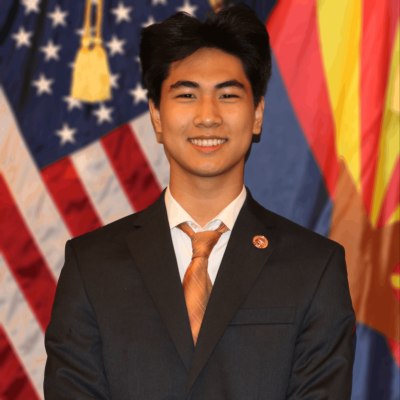
Spring 2026 Winner of the Community Impact Scholarship
Kevin Chen
As someone who struggled with speech as a child, Kevin grew to become an incredibly empathetic student. His passion for public service started in high school, advocating for those affected by the extreme heat levels in Arizona. We are happy to congratulate Kevin as he continues advocating for others throughout his college career.
Read Their Essay Here:
“I want to be a Ledo designer,” I told my kindergarten teacher—“Ledo” was how I pronounced Lego as a five-year-old. The scratch of her pen placed me in speech therapy.
Even after I completed the program, I had to rehearse every word before speaking. I handled my words like glass as if they were fragile and sharp, so I learned to observe others instead, attuning to subtle cues. When a new student in my fourth-grade class struggled with opening his milk carton, his frustration reminded me of my own muted self. I reached across the table and said, “Have mine,” without explaining why.
In middle school, my friends joked that I was “the therapist” among us. I never asked to be, but when someone was hurting, they’d find me for support. I listened without interruption because I knew what being misheard felt like. My sensitivity allowed me to understand, long before speech, what people needed most—often someone who’d listen.
In high school, I was overjoyed to join the Governor’s Youth Commission. As he welcomed us, Kainoa, commission coordinator, said: “You are at the table where decisions are made. Make your voice heard or don’t speak at all.”
His bluntness startled me but was also liberating. I stopped treating my voice as a liability. When the Town Council opened for comments on addressing teen violence, I stepped up to the podium. My voice shook, but the honesty in my trembling made my words real. At that moment, empathy gave my advocacy meaning, not speaking on behalf of others but helping them be heard.
I became restless to serve people who lacked an advocate—those whose voices never made it to the table. During a sweltering Arizona summer, a blackout struck my neighborhood, exposing unequal access to safety.
Following YouTube tutorials and mapping methods textbooks, I taught myself R and QGIS to construct a social vulnerability index for Maricopa County using socioeconomic and environmental variables. Overlaying my index with the distribution of cooling centers, I identified seven urban and rural locations that experienced high vulnerability and limited access to life-saving resources. Eager to apply my work to the real world, I shared my findings with county public health officials. Additionally, I first-authored my manuscript, currently under review in the Journal of Urban Health.
However, I had a lingering feeling that my project did not adequately represent the human side of heat relief efforts. Beyond my research project, I decided to learn from the community leaders at the front of tackling extreme heat. One afternoon, on my way to conduct an interview at the Diamond Street Resource Center, I spotted a man named Marco crouching in the shadow cast by his belongings.
Sweat rolled past my eyes as I asked, “Where do you go to cool off during the day?” “Nowhere really.” Marco squinted through the glare and gave an exhausted shrug. “I’m lucky to have some shade.”
For a moment, neither of us spoke. I didn’t fill that silence; instead, I allowed Marco’s pause to speak for itself. The silence wasn’t empty but rather filled with everything he couldn’t bring himself to say. The pause gave weight to Marco’s words. I realized that the most meaningful thing I could offer wasn’t words, but presence. He declined being interviewed for my project, but meeting him shifted my focus to the lives at stake—the people left out of the decisions that shaped their lives.
For weeks, I darted between interviews, meeting volunteers who felt unsatisfied. Cleo, human services planner, admitted that heat relief campaigns prioritized expediency over need. The more I interviewed, the more I realized how 117-degree summers widened existing gaps, leaving communities without adequate shelters. Every conversation revealed how well-intentioned service can overlook real needs.
I published my documentary, which has accumulated over 16,000 views and captured what yearly reports had missed—the lived reality of those beyond the reach of heat relief efforts. A week later, Cleo emailed me, “We’ve needed this kind of clarity for years.” As my project was shared by the Heat Relief Network and Governor’s office, it helped local leaders consider seven new heat relief sites in critical areas. For the first time, my voice, not just my ideas, became empowering, moving decision-makers to reevaluate the systems they had managed. For my commitment to serving vulnerable populations, I was recognized with one of seven Governor’s Volunteer Service Awards—the highest community leadership honor in the state.
Beyond heat relief, my service extends to individuals suffering through abusive relationships. Coming from a town where domestic abuse was dismissed as “someone else’s problem,” I recognized when friends were pressured into silence, so I decided to learn how to be the support system my community needed. I trained as a Lead Peer Advocate with BLOOM365, a non-profit dedicated to peer-based intervention, and founded my school’s first domestic violence prevention club. Over two years, more than 500 students have engaged in our campaigns: red-flag checklists, sidewalk chalk murals, and weekly tabling events. As Domestic Violence Workgroup Chair of the Governor’s Youth Commission, I expanded statewide initiatives to seven counties, coordinating five donation drives that collected over $105,000 worth of essential supplies for domestic violence shelters. What started as hope for a safer school has grown into a commitment to a community where empathy becomes the first step toward lasting change.
I serve my community by recognizing that sustainable change emerges only when the people closest to the problem help design the solution. By seeking to elevate the voices of those who never had the chance to speak, I ensure that every table where decisions are made includes the people those decisions will impact most.
I made a promise to that five-year-old boy with a speech impediment—I’ll always be his “Ledo designer,” building bridges of understanding with the voice that once failed him.
3030 Lyndon B Johnson Fwy, #130
Dallas, TX 75234
PHONE 214-221-5800

Dallas, TX 75234214-221-5800

Contact Our Firm
 The use of the Internet or this form for communication with the firm or any individual member of the firm does not establish an attorney-client relationship. Confidential or time-sensitive information should not be sent through this form.
I have read and understand the Disclaimer and Privacy Policy.